
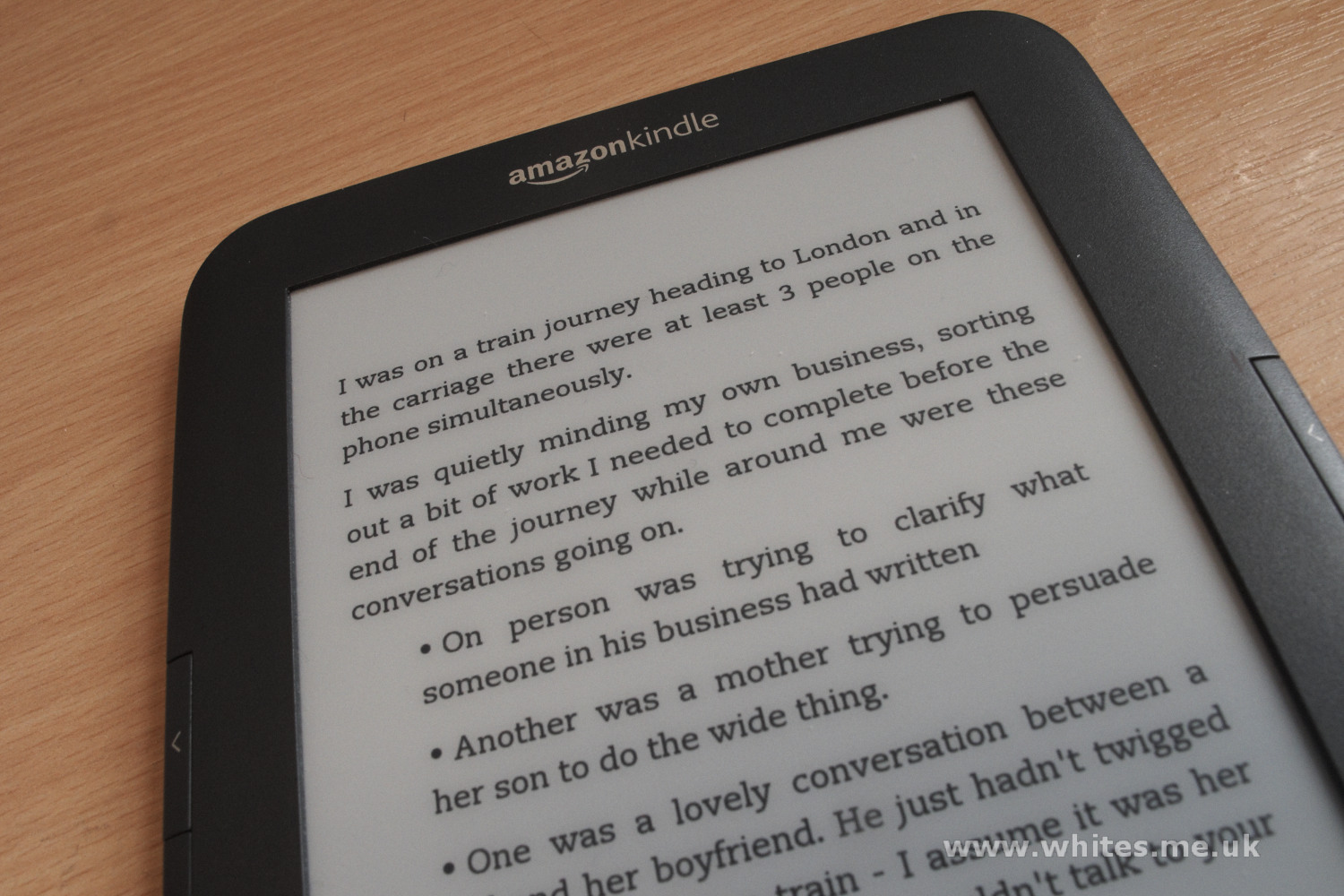
The Amazon Kindle - click this thumb to see the clarity of its text
It’s a question I’ve been asked dozens of times recently when I’ve been speaking at meetings or preaching in church. The gadget people are asking about is an Amazon Kindle which I now use as my preferred way of reading notes when I’m speaking.
It all started accidentally when my wife Ros was given some Amazon vouchers by a friend. She wasn’t sure what to buy with them as, after all, trawling Amazon is like walking through Selfridges, Debenhams, Foyles, Aldi and your local flea market all at once. She had settled on the idea of buying a book but wasn’t sure of which one when she came across a likely candidate. The trouble was, it didn’t use up anywhere near the full value of the voucher until she noticed something. It was available on a kindle. Never having used one before she sunk all of her voucher (and some) to buy both the book and the kindle and proudly opened the box when it arrived at our house.
Within days she’d lost it. Not down the side of the sofa but into my office where I experimented with this piece of tech and instantly saw its potential for preaching. I’d been considering an investment in a piece of tech from which to read my notes for months but not settled on anything. The IPad just didn’t fit the bill. It was comparatively heavy and awkward to carry when moving round the platform while preaching. It was also very expensive and it’s touch sensitive screen was a liability when holding it one-handed. Every time my thumb hit the screen, the cursor jumped to it and I found myself editing without intending to.
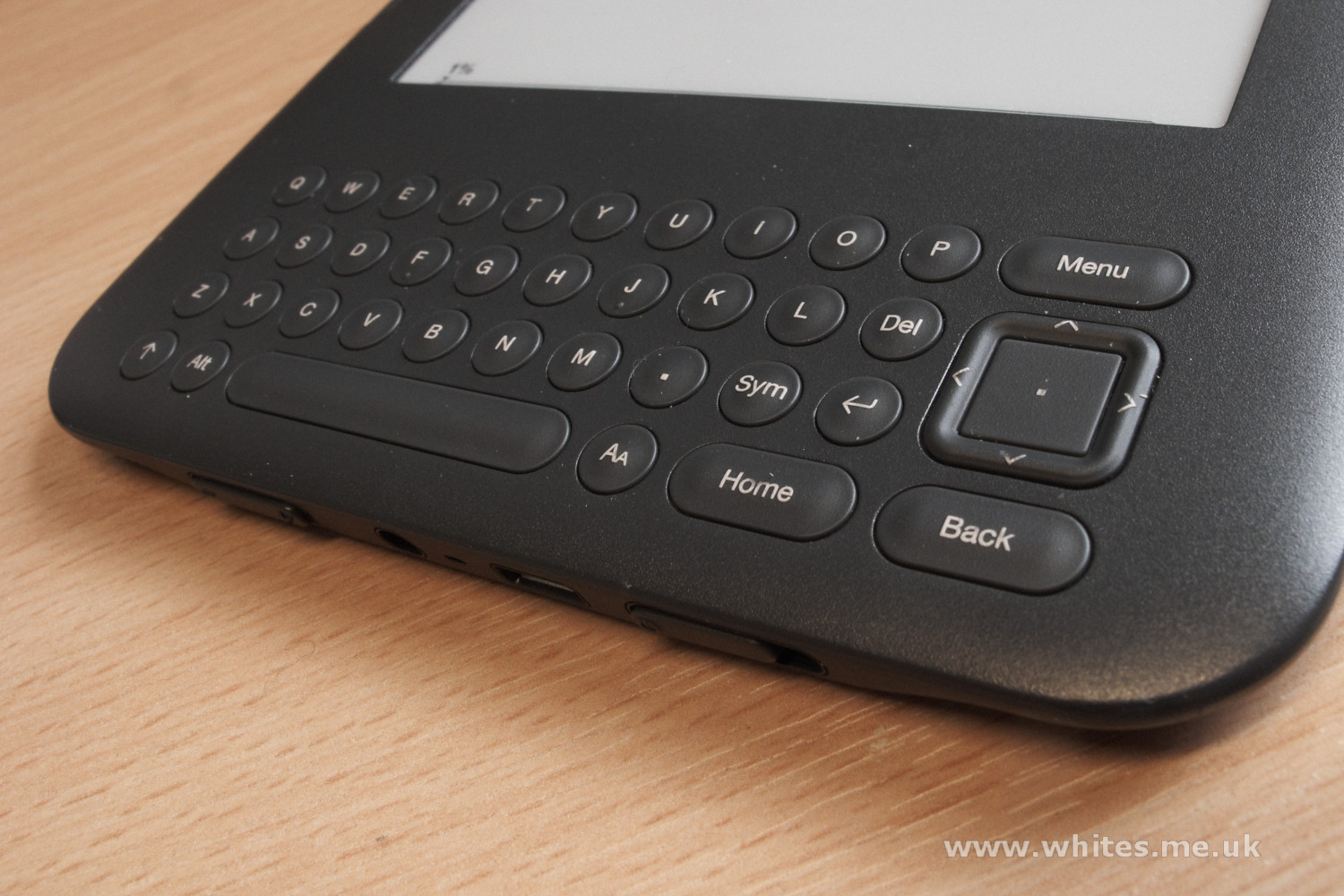
The keypad is used for searching and tweeting but can't be used for editing
Curiously its the slightly lower-tech aspects of the kindle which make it so useful for preaching for example:
there’s no back-light
so it doesn’t shine up in your face. The text is illuminated only with ambient lighting and this makes it exceptionally legible in platform conditions. When under spot-lights (as I am each Sunday) a back-lit screen has to be set at a very high brightness if you’re going to stand a chance of seeing it. But with the kindle’s ability to reflect the light around you there’s no need for a battery-sapping high brightness display. OK, you can’t read your kindle in the dark – but when did you last really need to read in pitch blackness eh?
it’s not touch sensitive
This means I can hold it with one hand (sometimes with a microphone in the other) and be confident I’m not going to change my text on the fly or suddenly jump into a browser that points to the wikipedia article on Lapsang tea (or whatever). It rests in the hand nicely and the side-mounted buttons which advance to the next page can be operated single-handed.
it respects formatting
When I send ordinary word documents to the device containing sermon notes they are displayed with the Kindle’s internal formatting tools. This means that type face and font size are variable, as they are when you read any kindle book. When I write my notes they are formatted using a consistent pattern of titles, highlights, indents and bullets which enables my eye to locate my position on the page easily (a vital aspect of preaching with notes).
So is there a down side? Actually yes. When I craft a sermon I invariably want to make last minute changes to it’s content as the time of preaching approaches. They may only be minor tweaks, or references to something that’s been happening in the service but as things stand I can’t make edits to the text (unless I’ve missed something in the manual). Maybe the new Kindle fire will get round this.
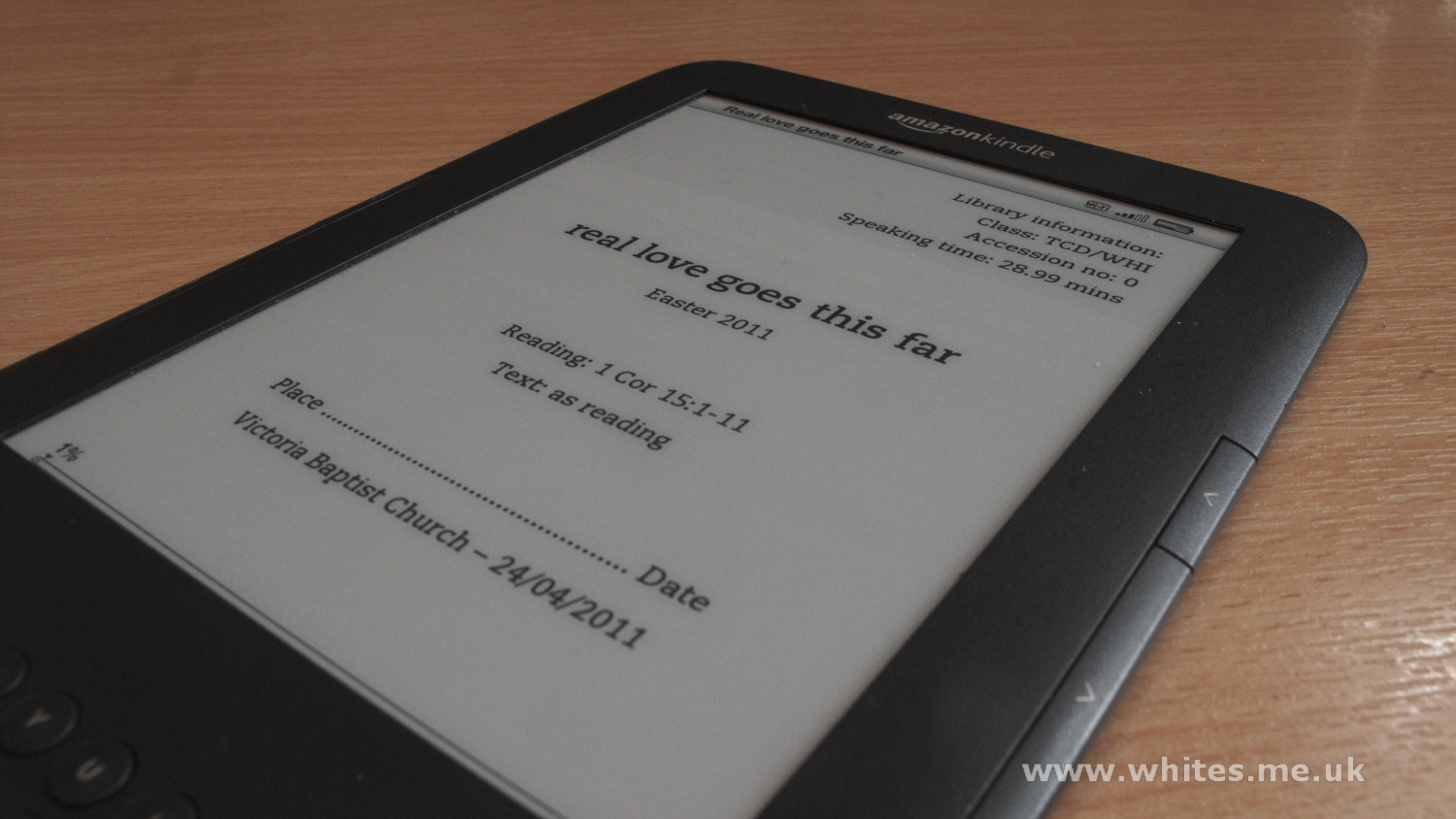
The clarity of the e-ink makes it easy to read in varying lighting conditions
So what happened to Ros’s Kindle? She took it back. It was hers anyway and I bought one of my own. She tells me that I couldn’t live with myself if I was being outdone by her in technology. Sad eh?
So now we’re a two-kindle family.
