
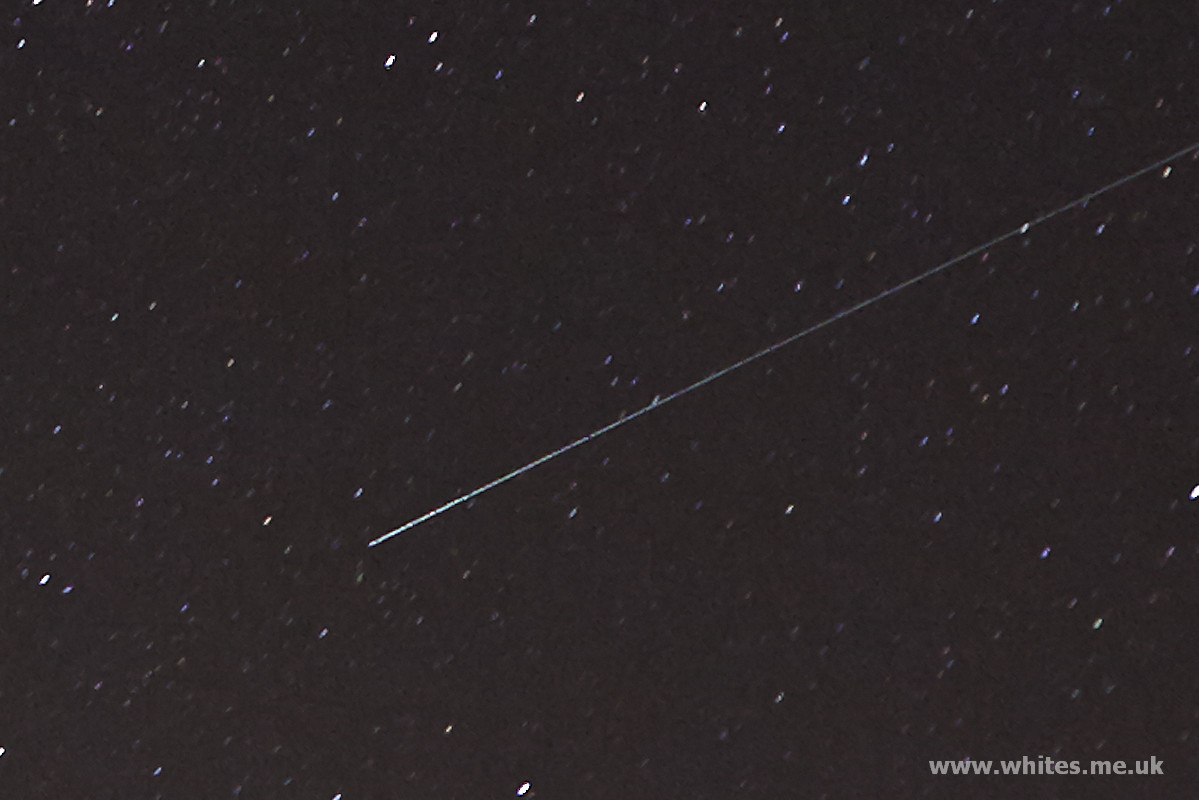
Celestial fireworks always fascinate me and to get such a good sighting of a meteor shower – and the time to watch it – was a real treat. Rosi and I donned our jumpers, got hold of our camera and a few other bits of kit and set off to do some meteor hunting. We weren’t disappointed. Lying beneath a rug on Beachy Head where the light pollution is lower we saw this magnificent display of shooting stars. To begin with we wondered if anything was happening but the predicted rate of about one a minute proved to be correct and we watched (and I photographed) as the earth hurtled through the debris of the Swift-Tuttle comet.
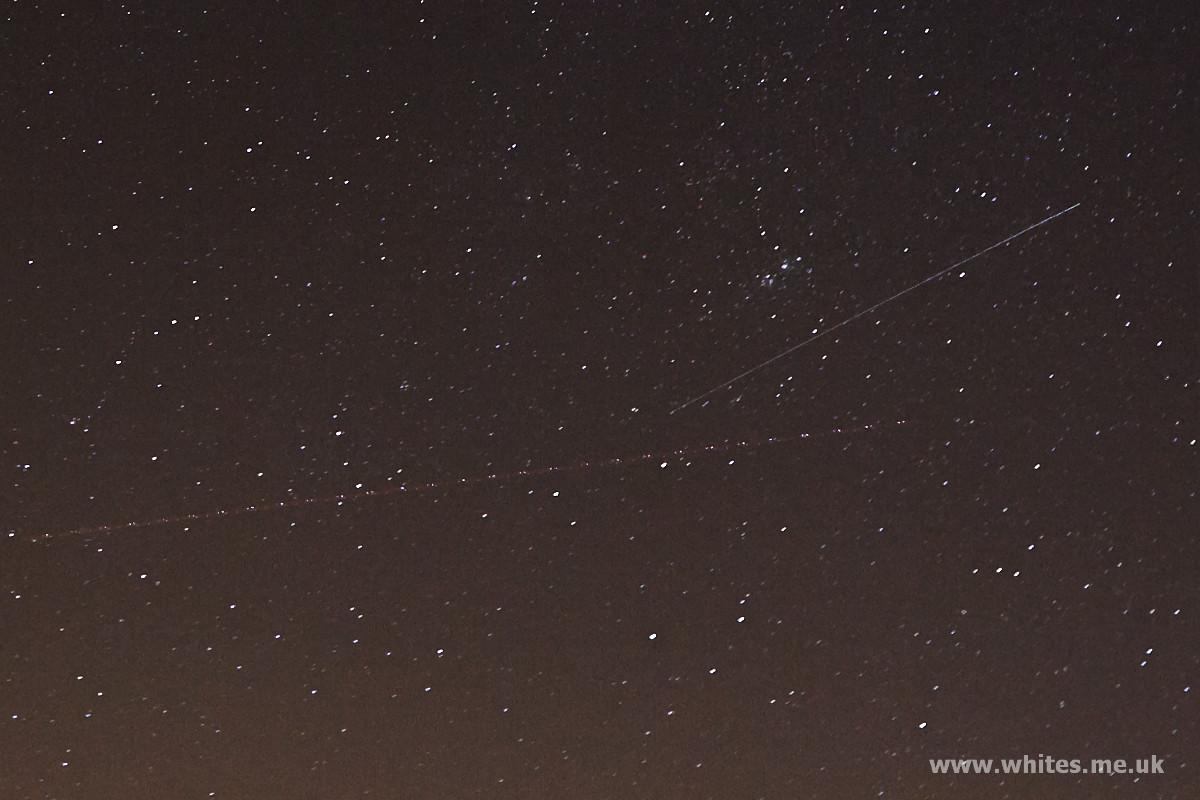
In this next image you can clearly see an aircraft trail with its alternating lights as well as the meteor.
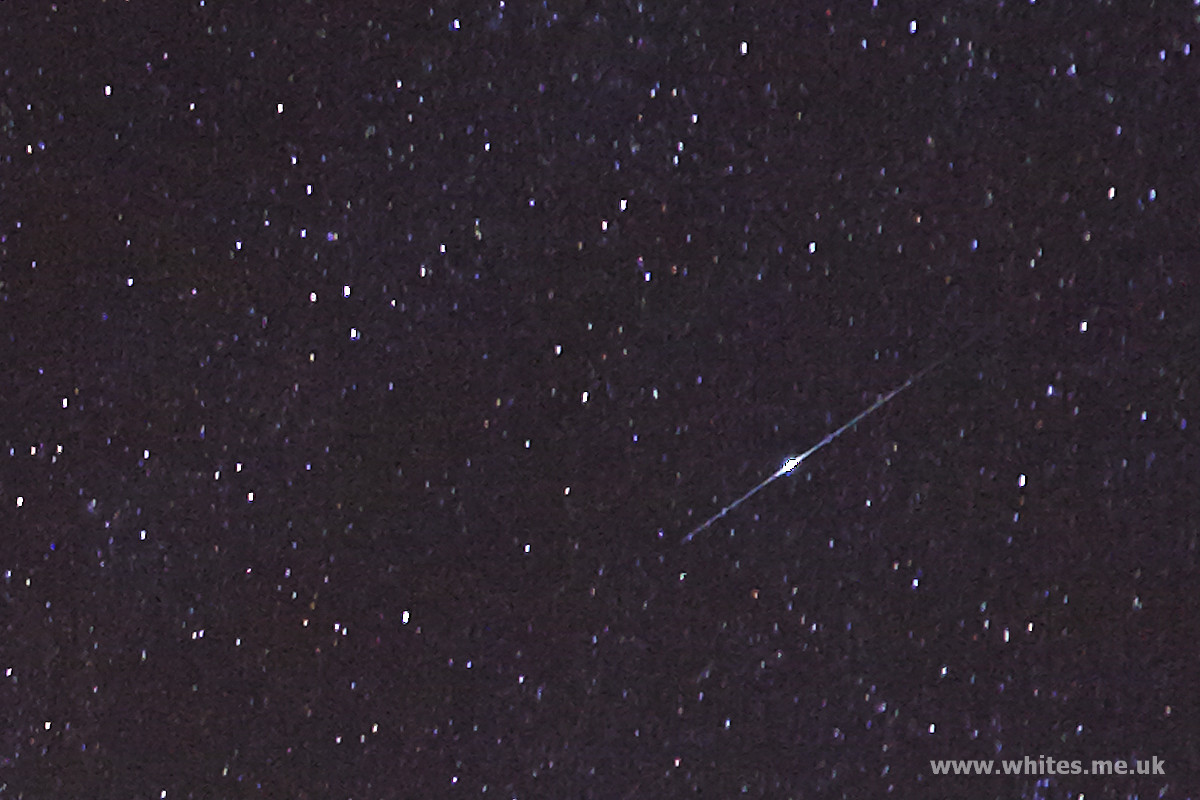
 This image appears to show a meteor intersecting with a star.
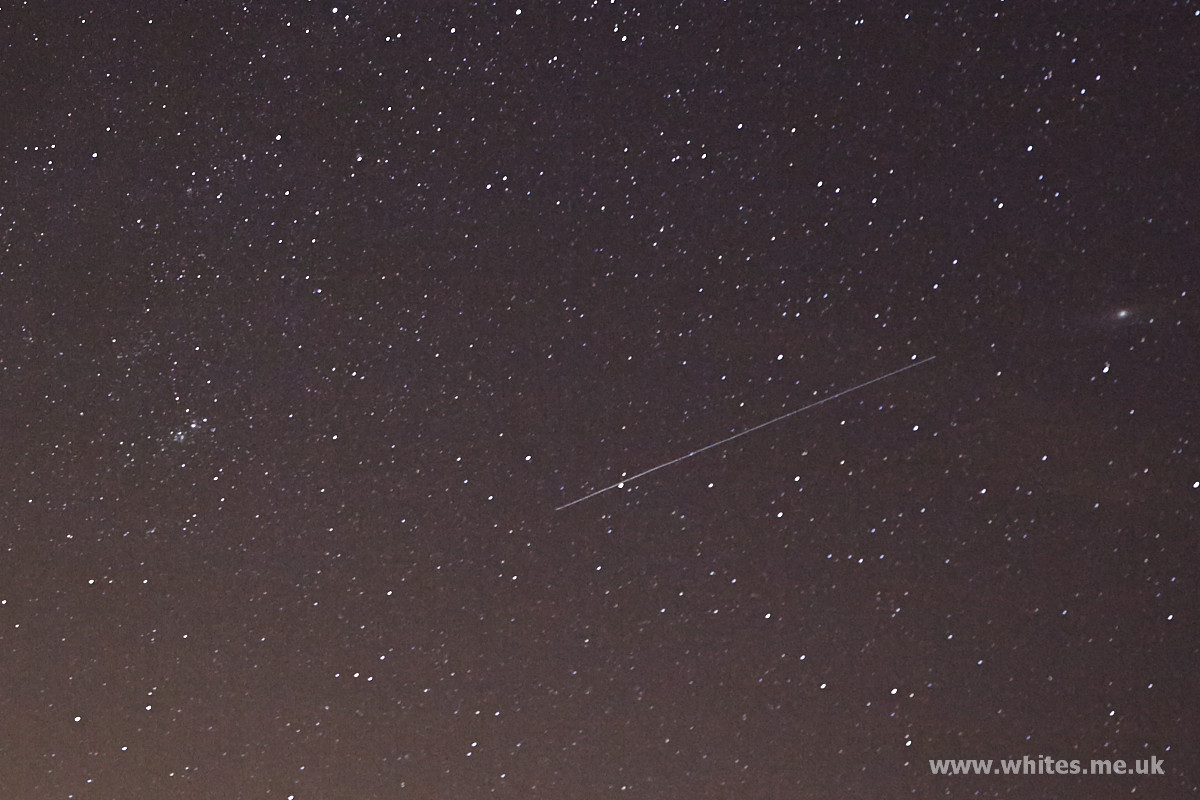
The eagle-eyed will notice that some of the stars in the background appear to me moving very slightly. This is not camera-shake but is the movement of the stars across the plane of the camera. Each shot had the shutter open for 30 seconds and the tiny traverse you can see the distance the star moves across the sky in half a minute.
And why are they called the ‘Persids’? The answer lies in the direction from which these meteors arrive. If you were to trace a line back from the visible streak of each meteor in a shower the lines would converge at a point known as the radiant. It’s as if all the meteors arrive from the same place in the sky, and the radiant of the Swift-Tuttle comet is in the Perseus constellation.
Enjoy
(We did!)

