June 23rd
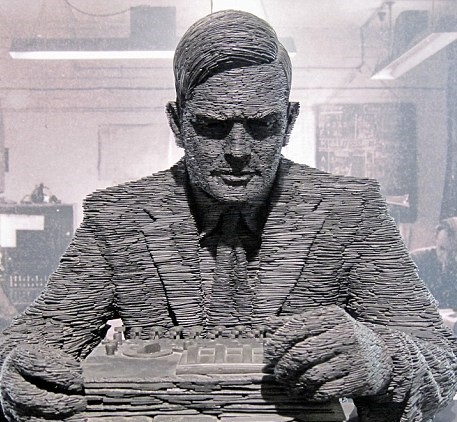
… is the birthday of one of my heroes. Without Alan Turing and his painstaking design of the ‘Turing machine’ you probably wouldn’t be reading this article at all.
June 23rd will also be the day on which Britain will make one of the most far-reaching decisions in its history. Instead of being made unilaterally by a reigning monarch, or by the delegated authority of an elected government, this decision has been placed in your hands and mine. No pressure, then.
Many Christians are puzzled, even bewildered, about how to approach such a decision. Is there a demonstrably Biblical view on our membership of the EU or are we to be left to our own devices when making up our mind?
On this vote there is no precedent from history for us to draw on; and the predictions about the future impact are mostly based on conjecture. Even experts in the same field sometimes come to opposing conclusions. So what should I do? Toss a coin? Resurrect the old Urim and Thummim? There has to be a better way.
I’m going to give you here the factors I will bear in mind as I cast my on vote on my hero’s birthday. You won’t get a Brexit or Stick-with-it conclusion from me here, but I hope these ideas will help you think out your own view.
There are some key areas that, as a Christian, I believe are important to consider and I will summarise them here. A very brief article like this can only ever scratch the bark of a question whose branches cover so many areas of life and whose roots go deep into our history. So these are the questions I’m asking myself right now.
1. How will my decision impact the most vulnerable in society?
Throughout the Bible the people of God have been called on to protect the powerless and care for the poor. Jesus bias towards the marginalised was seen in his healing of the sick, who often came from the lower echelons on their society. If you think the EU has helped to support workers rights or care for the poor, you might want to stay in. If you think we can do a better job independently then Brexit is the way to go.
2. How will my decision affect religious freedom and the human rights?
For centuries it has been Christians who have spoken out most clearly for the kind of freedoms we enjoy today. Indeed, in the early seventeenth century, it was Baptist Christians who campaigned (and died) for the rights of freedom of worship and faith.
3. How will my decision affect the financial future of our nation?
The financial crunch of the late naughties showed that regulation is no substitute for healthy financial ethics. Institutional and retail investors were (and still are) demanding impossible returns on their money without regard to the consequences of doing so. Ignoring self-evident Biblical principles of equity-before-debt and saving-before-spending have left our country wallowing in indebtedness. Will being part of the EU control our nation’s greed or exacerbate it?
4. Do the emerging prophecies about the EU inform me about the spiritual big picture of the decision I’m taking?
In recent times there have been a plethora of prophecies relating to the Common Market (in it’s earlier incarnation) and now the EU. The Bible tells me that ‘the spirit of the prophet is subject to the prophet’ (1 Corinthians 14:32) which tells me that any prophecy is going to be laced with the personality of the prophet himself. Only the Bible’s own prophecies are infallible. This is why weighing prophetic words is so vital. So my prayer is that you will be able to distinguish the wise from the wacky. I believe God does speak to us over important questions like this and His word is one we should prayerfully listen out for, even if we don’t all come to the same conclusion.
And one last thing, I am bothered by the implied selfishness which lies at the heart of many of the arguments I hear from the media. As a Christian I have a higher duty to society that just to think of my own personal, short term gain when making up my mind. I have a responsibility to society to think more generously than whether my vote makes me better off or not.
Oh, and Alan Turing’s machine? We now call it a computer.
Happy 23rd June.